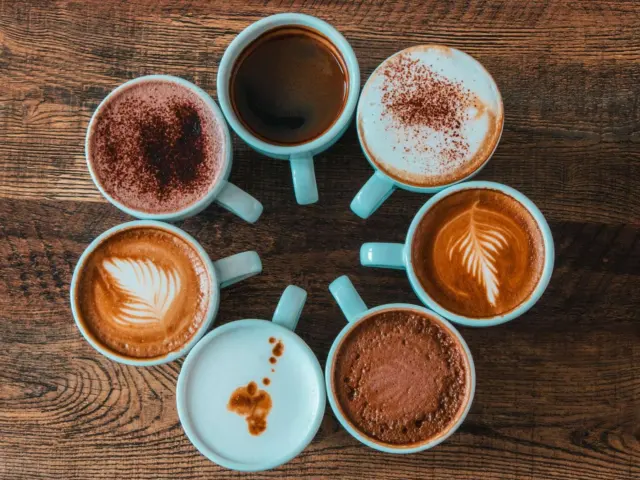
You may wonder why a coffee shop feels like more than a coffee stop. Cafe culture is the shared habit of meeting, talking and reading in coffee houses, and the first Ottoman one opened in Istanbul in 1555.
| Item | Value |
|---|---|
| First Ottoman coffeehouse, in Istanbul | 1555 (year) |
| Coffeehouses in Istanbul by the end of the nineteenth century | Nearly 2,500 (coffeehouses) |
| Ottoman ratio of coffeehouses to commercial shops | One coffeehouse for every six or seven shops |
| First coffeehouses in Venice | 1629 (year) |
| First coffeehouse in England, in Oxford | 1650 (year) |
| First coffeehouse in London | 1652 (year) |
These figures come from Wikipedia’s Ottoman coffeehouse entry and Brewminate’s history of the coffeehouse. Historical dates and counts can change as researchers revise them, so check the sources before you rely on them.
What cafe culture really means
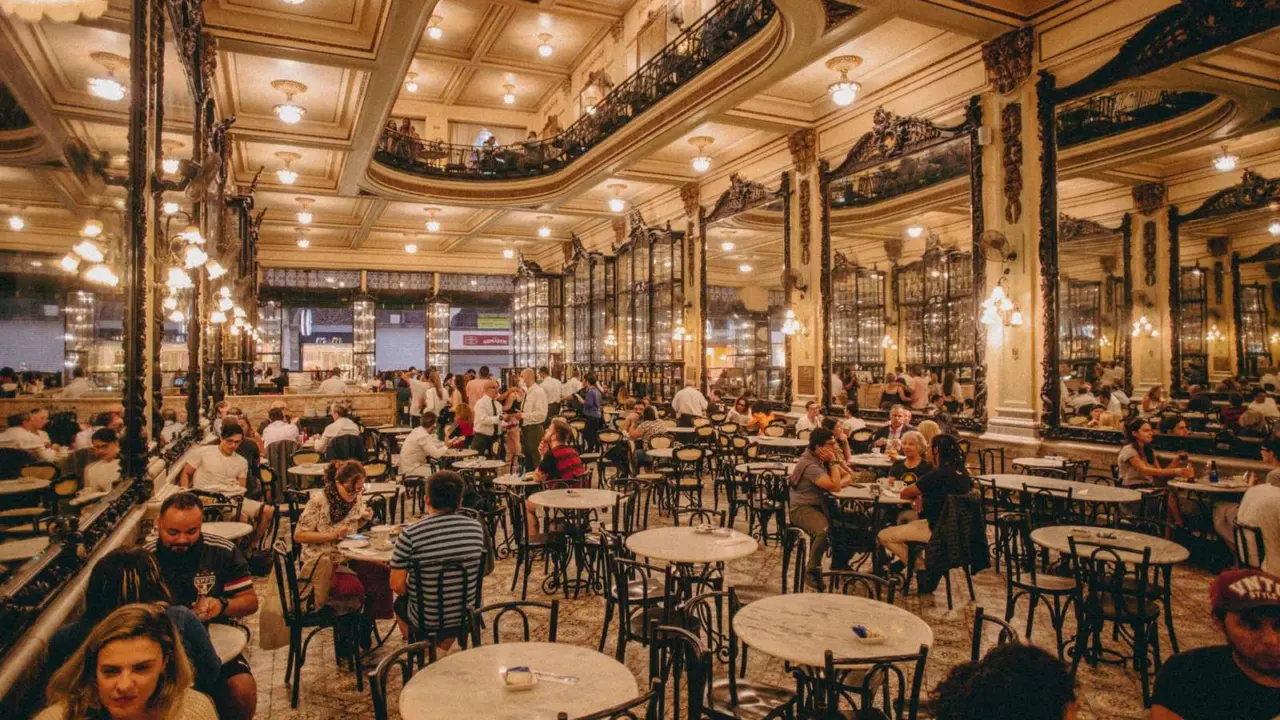
Cafe culture is the set of habits that grow up around a place where people can sit, talk, read and let the day slow down. It is about the room as much as the drink. A Brewminate overview of coffeehouse history says that, from a cultural standpoint, coffeehouses largely serve as centers of social interaction.
That overview also describes what patrons actually do there. The coffeehouse gives people a place to do the following, whether individually or in small groups:
- congregate and talk with others;
- read and write;
- entertain one another or simply pass the time.
Technology changed the room, not the purpose. According to the same overview, Wi-Fi turned many coffeehouses into places where patrons can get online on their laptops and tablet computers. A visit can now mean a meeting, a work session or a quiet hour with a book.
A coffeehouse can also serve as an informal club for its regular members. The overview adds that as early as the 1950s Beatnik era and the 1960s folk music scene, coffeehouses hosted singer-songwriter performances, typically in the evening (Brewminate). A cafe, in other words, can be a stage and a clubhouse as well as a shop.
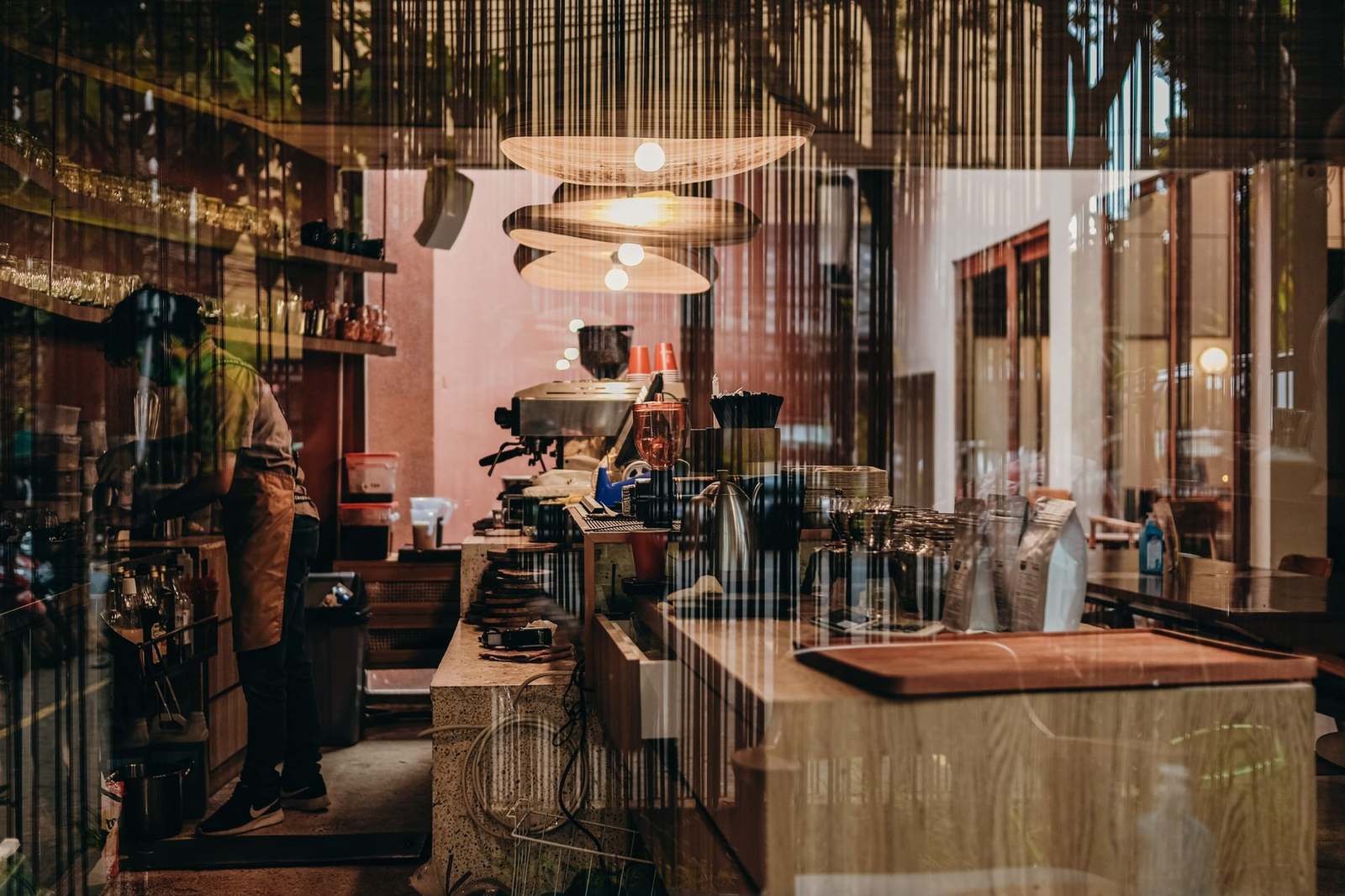
Put together, these descriptions suggest that cafe culture rests on a shared room more than on any single drink. People bring their own purposes, from a catch-up to a solo hour of reading, and the room makes space for all of them. That flexibility is part of why cafe culture appears in so many cities and styles.
A few terms need sorting out first. In the overview’s definition, a coffeehouse, coffee shop or café is an establishment that primarily serves coffee and related drinks such as latte, cappuccino and espresso. Espresso bars are a type of coffeehouse that specializes in espresso and espresso-based drinks.
Those drink names can feel like a secret code when you are new to a cafe. If the menu looks like that, a guide to the types of espresso drinks will translate it for you.
Where cafe culture began: the Ottoman coffeehouse
The story starts before the cafe as most people picture it. According to Wikipedia, the activity of coffee-drinking and coffeehouses originated in Arabia, then moved to Egypt, to Iran and to the Ottoman Empire during the sixteenth century. The Ottoman coffeehouse (kahvehane) became a distinctive part of Ottoman culture.
The same entry says the first coffeehouse in the Ottoman Empire opened in Istanbul in 1555, during the reign of Suleiman the Magnificent. It was founded by two merchants from Damascus and established in Tahtakale, Istanbul (Wikipedia).
Accounts differ on the founders’ names. The Ottoman chronicler İbrahim Peçevi, quoted by Brewminate, says a fellow called Hakam from Aleppo and a wag called Shams from Damascus came to the city. Both versions agree on the district, Tahtakale, and on the mid-sixteenth century setting.
Why did the idea catch on? Wikipedia notes that before coffeehouses, the home, the mosque and the shop were the primary sites of interpersonal interaction. The coffeehouse added a new public room where people could meet outside those places.
It spread quickly. The same entry says there eventually existed one coffeehouse for every six or seven commercial shops, and that by the end of the nineteenth century there were nearly 2,500 coffeehouses in Istanbul alone (Wikipedia).
The menu grew too. Wikipedia says coffeehouses began to offer more than coffee, and the entry lists the extras:
- coffee, the original draw;
- sweet beverages;
- candies.
The same source says coffeehouses differed in scale, with some serving as neighborhood establishments and others as large community centers. Because of that, different people sometimes visited different shops. A neighborhood spot and a big gathering hall could coexist in the same city, much as a corner cafe and a large cafe do now.
The word hub is worth pausing on. A shop serves customers one at a time, while a community hub keeps people together. Wikipedia says coffeehouses functioned as community hubs, and it quotes Eminegül Karababa and Güliz Ger, who note that rather than merely providing a place to drink coffee, the coffeehouse created a pleasant site for patrons to interact in.
Any honest account also has to note who was left out. Wikipedia says coffeehouses brought together men from all levels of society, but they were restricted to the male population, and women and children were not allowed. They were principally Muslim gathering spots, though followers of other religions such as Christianity were known to attend occasionally.
That limited access is a useful reminder that cafe culture has a history, not a single fixed form. For the longer timeline, you can read the history of coffee houses as a companion to this overview.
How coffeehouses reached Europe
The Brewminate overview says that in the 17th century coffee appeared for the first time in Europe outside the Ottoman Empire, and coffeehouses were established and soon became increasingly popular (Brewminate). The trade link between Venice and the Ottomans is part of the reason.
The same source gives a rough timeline of early European and English coffeehouses:
- 1629: the first coffeehouses appear in Venice because of the traffic between Venice and the Ottomans, and the very first one is recorded in 1645.
- 1650: the first coffeehouse in England is set up in Oxford by a Jewish man named Jacob at the Angel.
- 1652: the first coffeehouse in London opens in St Michael’s Alley, Cornhill.
- 1654: Oxford’s Queen’s Lane Coffee House is established.
- 1660: the first café is believed to have opened in France.
- 1670 to 1685: the number of London coffee-houses multiplies.
The London story has a clear cast of characters. According to Brewminate, the proprietor was Pasqua Rosée, the servant of a trader in Turkish goods named Daniel Edwards, who imported the coffee and helped him set up the shop. It is a small business story, and a trade story, at the root of a large cultural habit.
Not every account tells the story the same way. Another Brewminate article cites The Reuben Percy Anecdotes, compiled by journalist Thomas Byerley, which says an Armenian opened a coffee shop in Europe in 1674. It describes those first European coffee houses as “imperfect” establishments where liquor and cigarettes were still consumed, so early dates are worth treating as approximate.
Those same London coffee-houses also began to gain political importance because they were popular as places of debate (Brewminate). People came for the drink and stayed for the conversation.
Religion and morals shaped the welcome coffee received. Wikipedia says that in Protestant-majority countries such as Britain, coffee was thought to have mentally stimulating properties and was seen as a positive alternative to alcohol. Protestant visitors to the Ottoman Empire saw it as consistent with the values of temperance and the Protestant work ethic, a view that gave coffee a respectable reputation in those places.
Even the vocabulary of the cafe carries that history. The English words coffee and café derive from the Italian caffè, first attested as caveé in Venice in 1570, which in turn derives from Arabic qahwa (Brewminate). The same overview says qahwa originally referred to a type of wine, and after Islam’s wine ban the name was transferred to coffee because of its similar rousing effect.
The spelling travelled as well. The overview says the spelling café was adopted by English-speaking countries in the late-19th century, and that the plain cafe spelling has since become very common in English usage (Brewminate).

What people did there: learning, news and debate
The early coffeehouse was never only about caffeine. Wikipedia says Ottoman-era coffeehouses democratized education across all strata of society, because people of low literacy could sit alongside educated individuals. The entry connects this to scholar John Houghton’s phrase penny university, which conveys the virtually free nature of the education men could get by visiting.
News travelled the same way. According to the same entry, more literate society members would hold public readings of the news, allowing the illiterate to stay informed. These readings were especially helpful for people who could not afford newspaper subscriptions.
Entertainment was part of the offer too. Wikipedia describes several kinds of performance and amusement in Ottoman coffeehouses:
- plays that were satires of everyday life;
- improvisational performances;
- shadow puppet shows;
- narrated stories.
The Persian version looked similar. The 17th century French traveler Jean Chardin, quoted by Brewminate, wrote that people engage in conversation, for it is there that news is communicated, and that mollas, dervishes and poets take turns telling stories in verse or in prose. Talk, storytelling and games shared one room.
The guest list was varied. Wikipedia says coffeehouses drew together distinct groups, including academics, idlers, business men, and government officials. The Brewminate history of Ottoman coffeehouses adds poets, politicians, scholars, dervishes and, later, janissaries, who could meet in groups with similar interests to express their passions and thoughts. Such a mixed crowd is what made the conversation interesting.
Conversation was also risky for those in power. Wikipedia says the popularity of Ottoman coffeehouses attracted government interest, and that government spies attended them to gather public opinion.
Another Brewminate history of Ottoman coffeehouses says verbal communication was a crucial commonality for all guests. It was the chief means by which debates, plays, narrations, and even rebellions were organized. That tells you how much public talk mattered in these rooms.
Scholars have given the coffeehouse a place in a bigger picture of daily life. Wikipedia says that before its rise, men were found at work, the mosque, or at home. Referred to as the “Fourth Place,” the coffeehouse introduced a “neutral meeting ground” for them.
That phrase, neutral meeting ground, is the thread that connects the Ottoman room to the cafe you might visit this week. It is a place that belongs to no household and no institution, where you can sit among others without being anyone’s host or guest.
How cafe culture shapes daily life now
Researchers who study consumer culture say the link is direct. In a Journal of Consumer Research preprint, Eminegül Karababa and Güliz Ger write that masses of consumers enjoy leisure away from home and work in “third places” such as cafés. The third place idea sits between the home and the workplace.
The same paper says today’s café culture has materialized with certain continuities and ruptures from its origins. It also says the earliest form of the coffeehouse emerged in the mid-16th century Ottoman Empire and spread to the world in the next century (Karababa and Ger).
Cafes now come in many styles. The authors observe that cafés come in many styles, and they cite other researchers who argue that neither global nor local coffee shops are authentic, but that both are globally and socio-historically formed. In that reading, a neighborhood cafe and a large chain share a common ancestry in the early coffeehouse.
What does that mean for your own routine? The sources above point to several everyday uses of a cafe:
- a place to meet someone, talk or catch up;
- a place to read, write or work, especially where Wi-Fi is on offer;
- a place to join a group of regulars that works like an informal club;
- a place to hear a singer-songwriter in the evening, where cafes host them.
A simple way to see this for yourself is to watch what a cafe does for the people in it. Does it host regulars, offer somewhere to read, or put on music? Each answer connects back to a role the sources describe, from informal club to place for news and talk.
Because a cafe is shared space, a little know-how makes visits smoother. The guide to how to order coffee at a cafe covers the counter, and the guide to cafe etiquette covers the shared room. Both help you feel like a regular sooner.
Cafe culture keeps inventing, too. A photo caption in the Brewminate overview says Australia is considered the birthplace of the flat white (Brewminate). If you wonder how that drink differs from its neighbors, the explainer on flat white vs latte sets them side by side.
The long view is reassuring. Cafes have been places to talk for centuries, and the sources describe the same basics again and again: company, news, ideas, entertainment and a drink in your hand. Whether you go alone with a book or with friends, you are taking part in an old habit.
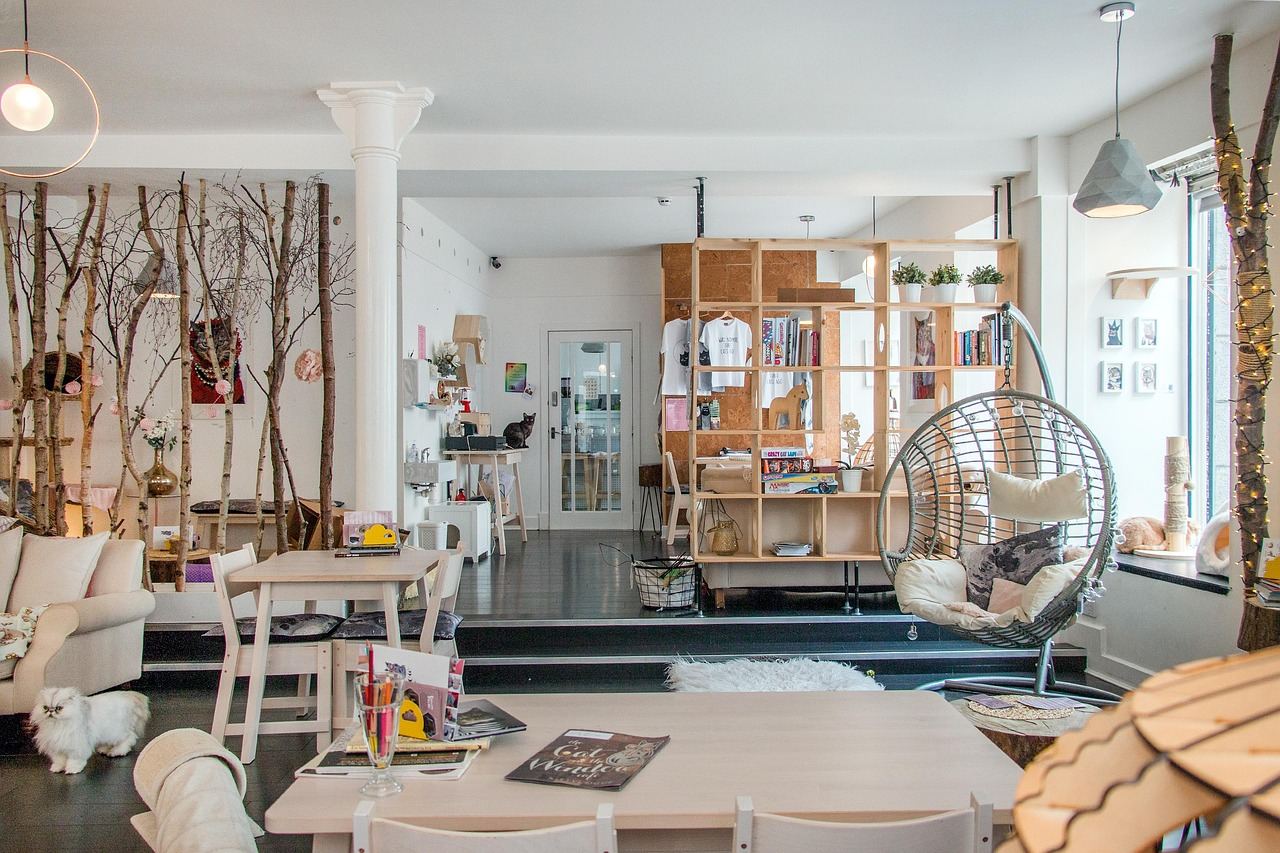
Going deeper into cafe culture
If the quality of the coffee is what draws you in, specialty coffee explained is a sensible next read. The related guide to third wave coffee covers the movement people often connect with it.
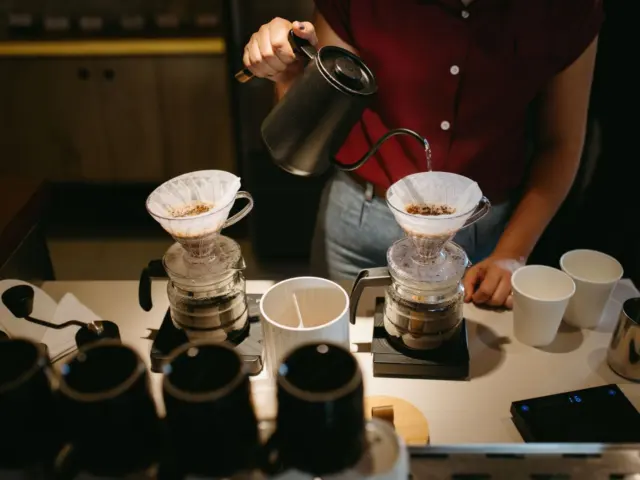
If you would rather bring the cafe home, the guide on how to brew pour over coffee walks you through a simple method. It is a quiet way to practice what you notice in cafes.
A cafe visit often turns into a meal, so brunch ideas are a natural place to continue. For another food tradition to explore alongside your coffee, try reading about dutch food.
The short version is easy to remember:
- cafe culture is built on conversation, news, leisure and company, not only on coffee;
- the coffeehouse took shape in the Ottoman Empire and then spread to Europe;
- access has changed over time, and early coffeehouses were not open to everyone;
- today’s cafes still work as shared rooms away from home and work.
Frequently asked questions
What is cafe culture?
Show answer
Cafe culture is the social habit of using coffeehouses as places to meet, talk, read and pass time. The Brewminate overview says coffeehouses largely serve as centers of social interaction.
When did the first coffeehouse open in Istanbul?
Show answer
According to Wikipedia’s Ottoman coffeehouse entry, the first coffeehouse in the Ottoman Empire opened in Istanbul in 1555, during the reign of Suleiman the Magnificent. Accounts of who founded it differ, so treat the founders’ names with care.
Why were Ottoman coffeehouses linked to a “penny university”?
Show answer
Because people of different backgrounds gathered there, illiterate or low literacy visitors could listen to educated people and hear the news read aloud. Wikipedia connects scholar John Houghton’s phrase to the virtually free nature of this education.
Is a cafe the same as a coffeehouse?
Show answer
Not always. The Brewminate overview says that while café may refer to a coffeehouse, the term “cafe” generally refers to a diner, a British cafe, a “greasy spoon”, a teahouse or another casual eating and drinking place.
Did cafe culture come to Europe from the Ottoman Empire?
Show answer
The sources point that way. Wikipedia says Europeans adopted coffeehouses and other Ottoman leisure customs during the early modern period, and Brewminate says the first Venetian coffeehouses appeared in 1629 because of traffic with the Ottomans.