Wondering what third wave coffee actually means when a menu names a farm? It is a movement that treats coffee like a craft food, with single-origin beans and lighter roasts. Here is how it differs from earlier waves.
This guide sits within the wider topic of cafe culture, looking at how one movement changed what a coffee shop is.
| Item | Value |
|---|---|
| Person most often credited with the term | Trish Rothgeb, in a 2003 article |
| Earlier print use of the term | Timothy J. Castle, December 1999 / January 2000 issue |
| First mainstream media mention | 2005, a National Public Radio piece |
| “Specialty coffee” term coined | 1974 |
| Specialty bean quality threshold | 80 points or more on a 100-point scale |
| Starbucks cafes worldwide | Over 23,000 (as of 2015) |
These figures come from Wikipedia’s entry on third-wave coffee. Dates and counts can change, and other sources give slightly different years, so check the source before you rely on them.
What third wave coffee means
Third wave coffee is a craft-first approach to coffee that puts quality, traceable sourcing and flavor ahead of volume and sameness. According to Wikipedia, the term is used primarily in the United States coffee industry and emphasizes higher quality, single-origin farms and light roast to bring out distinctive flavors.
The food critic Jonathan Gold of LA Weekly described it in March 2008 as a stage of coffee connoisseurship where beans are sourced from farms instead of countries. In his words, roasting is about bringing out the unique characteristics of each bean rather than incinerating them, as Wikipedia quotes him.
The label describes a culture as much as a drink. One coffee company’s retrospective calls it, in nearly every way, a descriptor not so much of coffee as of the culture surrounding it.
The first and second waves it reacted against
The wave idea only makes sense next to what came before. Each wave describes a different relationship between drinkers and the cup.
- First wave: instant coffee, grocery store canned coffee and diner coffee, with a focus on low price and consistent taste, per Wikipedia.
- Second wave: it began with Peet’s Coffee & Tea of Berkeley, California, which in the late 1960s began sourcing from artisanal producers. It introduced origin countries and espresso drinks to a wider public.
- Third wave: farm-level sourcing, lighter roasts and a focus on letting the bean’s flavor come through.
Peet’s inspired the founders of Starbucks, which grew into a global chain. That growth is part of the story, because the same retrospective says the need for consistency, scale and branding led to homogeneity.
Rothgeb argued in her article that this homogeneity, or rather a rebellion against it, birthed the third wave. That makes the movement a reaction to sameness, not just a taste for lighter coffee.
Who coined the term third wave coffee?
Most accounts credit the coffee professional Trish Rothgeb. Wikipedia places her use of the term in a 2003 article, while a coffee company’s retrospective says she wrote about it in 2002 in The Flamekeeper, the newsletter of the Roasters Guild. The sources differ on the year, so treat either date as approximate.
An earlier use exists. Wikipedia says the specialty coffee broker and author Timothy J. Castle used the term in an article titled “Coffee’s Third Wave” in the December 1999 / January 2000 issue of Tea & Coffee Asia. The first mention in mainstream media came in 2005, in a National Public Radio piece about barista competitions.
The wave metaphor was borrowed from feminism, according to a Boss Barista essay, which says Rothgeb coined the term to describe what she was seeing in Oslo at the turn of the millennium. The same essay quotes her saying the waves overlap and one inevitably spills over to influence the next.
What changed inside the cafe
The biggest shift is that the menu started to explain the coffee. According to a coffee history guide, the core ideas of the third wave look like this:
- Single origin: not just a country, but a specific region, farm or lot.
- Lighter roasts: a pull back to “City” or “Full City” roasts that let the bean’s flavor come through.
- Direct trade: roasters building relationships with specific farms and paying above commodity-market rates.
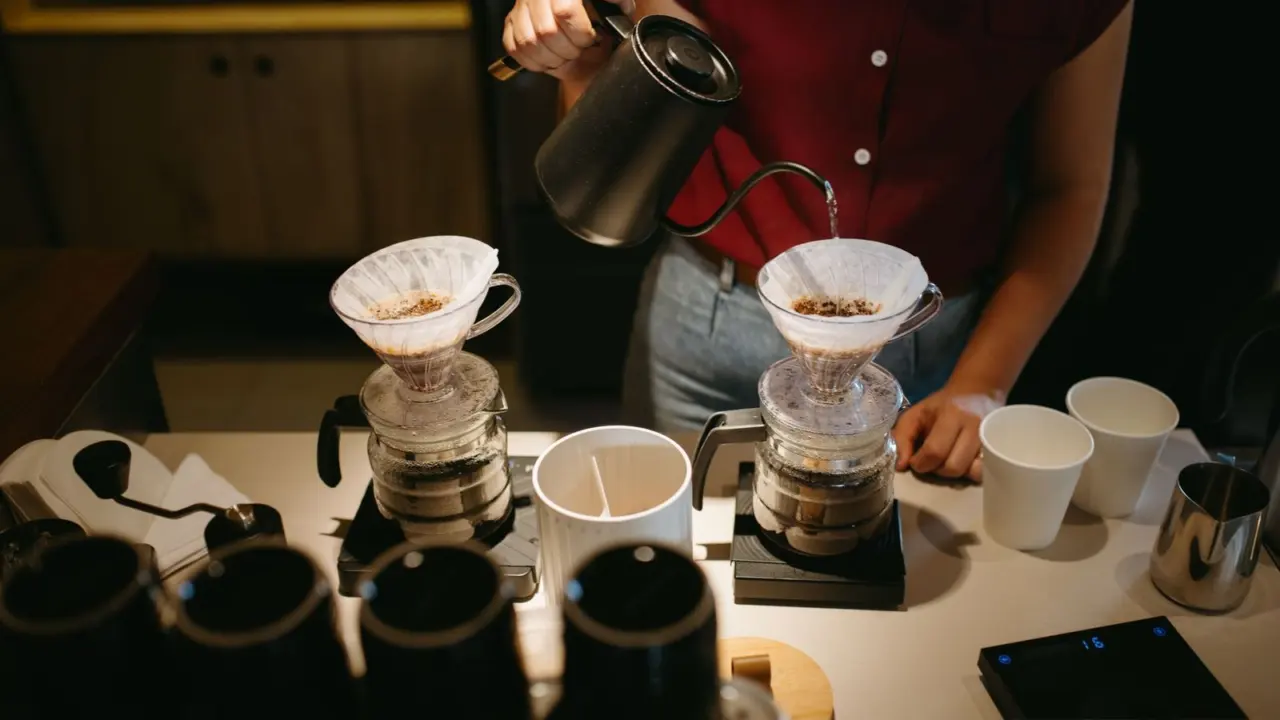
- Brewing precision: scales, timers, water temperature control and recipe specificity.
- Educated baristas: staff who can explain origins, processing methods and brewing variables.
Bags changed too. One retrospective says roasters now label bags with farm, harvest, processing style, roast date, coffee variety and tasting notes. Rothgeb’s own sketch of the third wave barista is someone who can tell you exactly when the coffee was roasted and how the beans were processed.
The pour-over became the visible symbol of this care. To try the method yourself, start with a guide on how to brew pour over coffee.
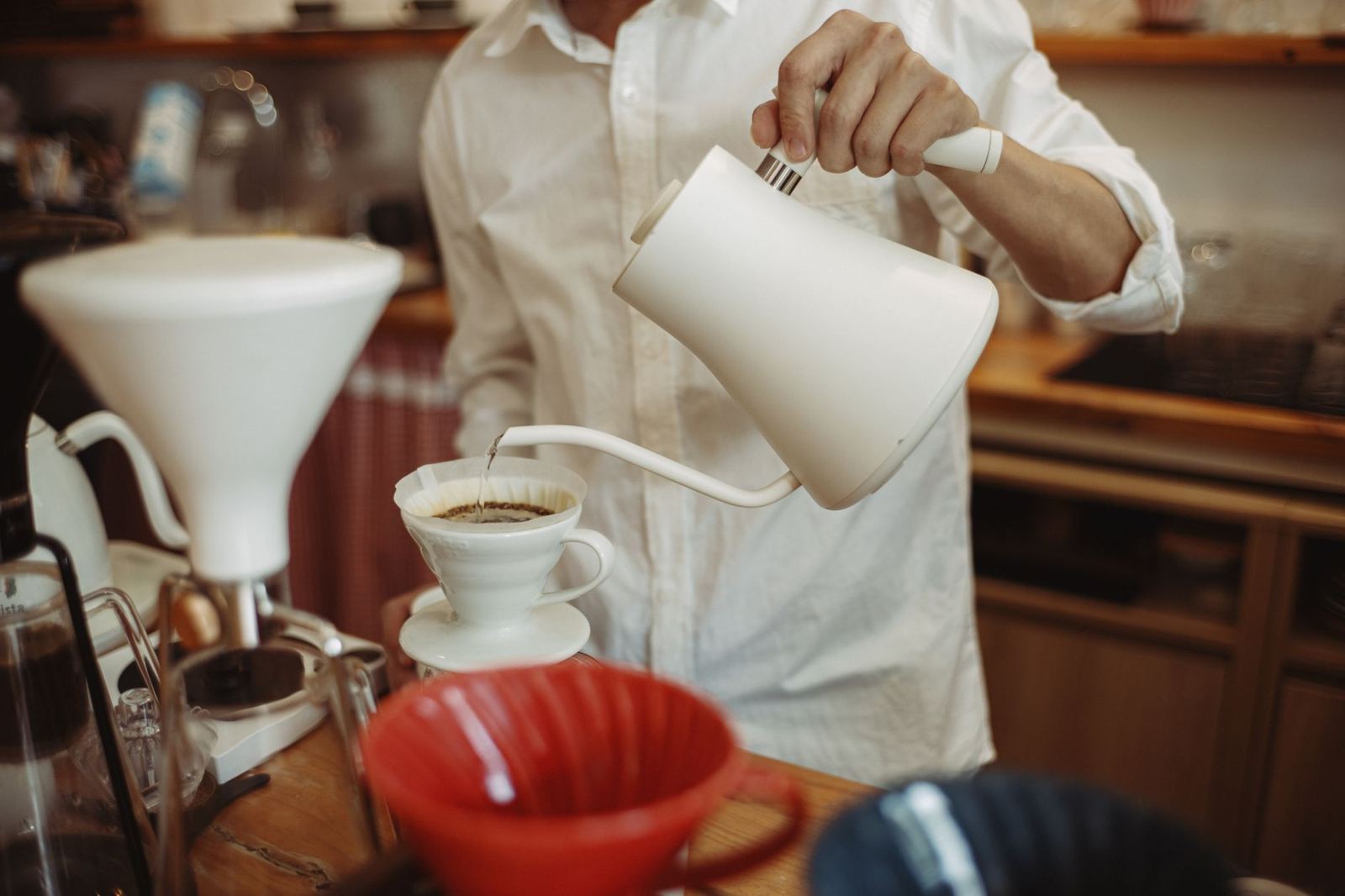
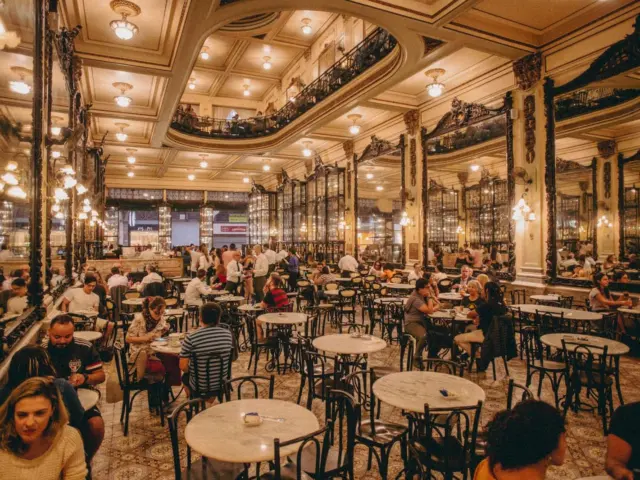
The rooms changed as well. A coffee industry analyst recounts Rothgeb’s point that coffee shops started to look less like the sofa-heavy Central Perk of the second wave and put more emphasis on the coffee, its origins and the way it was served.
A busy specialty counter also comes with its own manners, and the guide to cafe etiquette is a good place to start.
How roasters, chains and cities responded
In the United States, Wikipedia names a “Big Three of Third Wave Coffee”: Intelligentsia Coffee & Tea of Chicago, Stumptown Coffee Roasters of Portland, Oregon, and Counter Culture Coffee of Durham, North Carolina. All three engage in direct trade sourcing. The same page notes that Intelligentsia and Stumptown were acquired by Peet’s Coffee & Tea, itself part of JAB Holding Company, in 2015.
The big chains noticed. Per Wikipedia, Starbucks invested around $20 million in 2014 in a Seattle roastery and tasting room aimed at the third wave market. It also had over 23,000 cafes worldwide as of 2015, and its standard cafes use automated espresso machines that are faster and need less training than the conventional machines of third-wave competitors.
The same history guide says that by the mid-2010s third-wave aesthetics were so mainstream that Starbucks responded with Reserve roasteries and “blonde” lighter roast options.
The movement also traveled. Wikipedia lists Flat White, an early third-wave cafe in London, as opening in 2005 and the roastery Square Mile as opening in 2008. It also says Melbourne is known as the “capital of coffee” with its many cafes.
Growth brought a worry. One retrospective says Out of Order Magazine raised the potential decline of the third wave in November 2012, as corporate investors scouted independent roasters.
Is the third wave over?
There is no agreed answer, because the term has no fixed dates. One analyst reports Rothgeb noting that some people think they are still going through the third wave, while others feel it has been over for years.
Writers have also proposed more waves. According to a coffee history guide, they have been arguing about what comes next since about 2018, with ideas such as science, technology, sustainability, or specialty simply becoming mainstream. CoffeeBI mentions a fourth wave about the science of coffee and a fifth about its business, with even less consensus on those two.
In practice, third wave works best as shorthand, not a certification. If you want to judge a cafe for yourself, look for these signs:
- The menu or bag names the farm, region or producer, not only a country.
- A roast date is shown, and the roast is light enough for the bean’s flavor to come through.
- Staff can say how the coffee was processed and suggest a brewing method.
- The coffee, not syrup or whipped cream, is the focus of the drink.
Frequently asked questions
What is third wave coffee in simple terms?
Show answer
It is coffee treated as a craft product, with attention to the farm, the roast and the brew. Wikipedia summarizes it as an emphasis on higher quality, single-origin farms and light roast.
Who first used the term?
Show answer
Trish Rothgeb is generally credited, though Wikipedia notes the specialty coffee broker Timothy J. Castle had already used it in an issue of Tea & Coffee Asia dated December 1999 / January 2000. Sources also disagree on the exact year of Rothgeb’s piece, as the section on who coined the term explains.
Is third wave coffee the same as specialty coffee?
Show answer
They are closely linked. Wikipedia says third-wave coffee is associated with specialty coffee, a term coined in 1974 that refers narrowly to beans scoring 80 points or more on a 100-point scale.
Is there a fourth wave of coffee?
Show answer
People have proposed one, but there is no consensus on what it means. CoffeeBI notes references to a fourth wave about science and a fifth about business, with even less agreement on those two.