
Staring at a café menu and unsure what separates a ristretto from a latte? The main types of espresso drinks differ by water and milk: shots get shorter or longer, then gain milk, foam or chocolate.
This guide is part of the wider topic of cafe culture.
| Drink | Typical size |
|---|---|
| Single espresso | Usually 30ml |
| Doppio (double) | Usually 60ml |
| Ristretto | Usually 20ml |
| Cappuccino | 180ml |
| Latte | Typically around 240ml |
| Flat white | Around 150ml to 180ml |
These sizes come from Expert Reviews. Serving sizes differ between cafes and countries, so check the source before you rely on the figures.
The shots: espresso, doppio, ristretto and lungo
An espresso is a concentrated shot made by forcing hot water under high pressure through fine coffee grounds. A single is usually 30ml and carries a dense golden-brown layer of crema, according to Expert Reviews.
Every other drink in this guide starts from that shot, or from a variation of it:
- Doppio: two shots of espresso poured into a single cup, usually 60ml, and the default base in most coffee shops.
- Ristretto: the same quantity of coffee with less water, usually 20ml, which tastes sweeter because the bitter compounds take longer to extract.
- Lungo: the same quantity of coffee with double the water, so it is less concentrated and may taste more bitter.
Serving sizes also shift by country. Coffee Review describes a single as one-third of a demitasse in Italy and two-thirds in the United States, or 1 to 2 ounces. The same name can therefore mean a different amount in your cup.
Which espresso drinks add just a splash of milk?
A little milk turns a shot into a different drink without hiding the coffee. These are the small ones to look for:
- Macchiato: an espresso marked with a small dollop of milk foam. The Takeout notes it contains no steamed milk other than the froth on top.
- Cortado: equal parts espresso and milk, typically a 1:1 ratio per Expert Reviews, and Mental Floss adds that it has no froth or foam.
- Piccolo: generally a ristretto shot topped with steamed milk in a smaller glass, so think of it as a miniature, more intense latte.
A cappuccino is equal parts espresso, steamed milk and foamed milk, and The Takeout gives the traditional ratio as 1:1:1. Home Coffee Expert points out that the old “rule of thirds” could just as easily mean 1:2:2. In Italy it is generally considered a morning drink.
Latte, flat white and mocha: where milk takes over
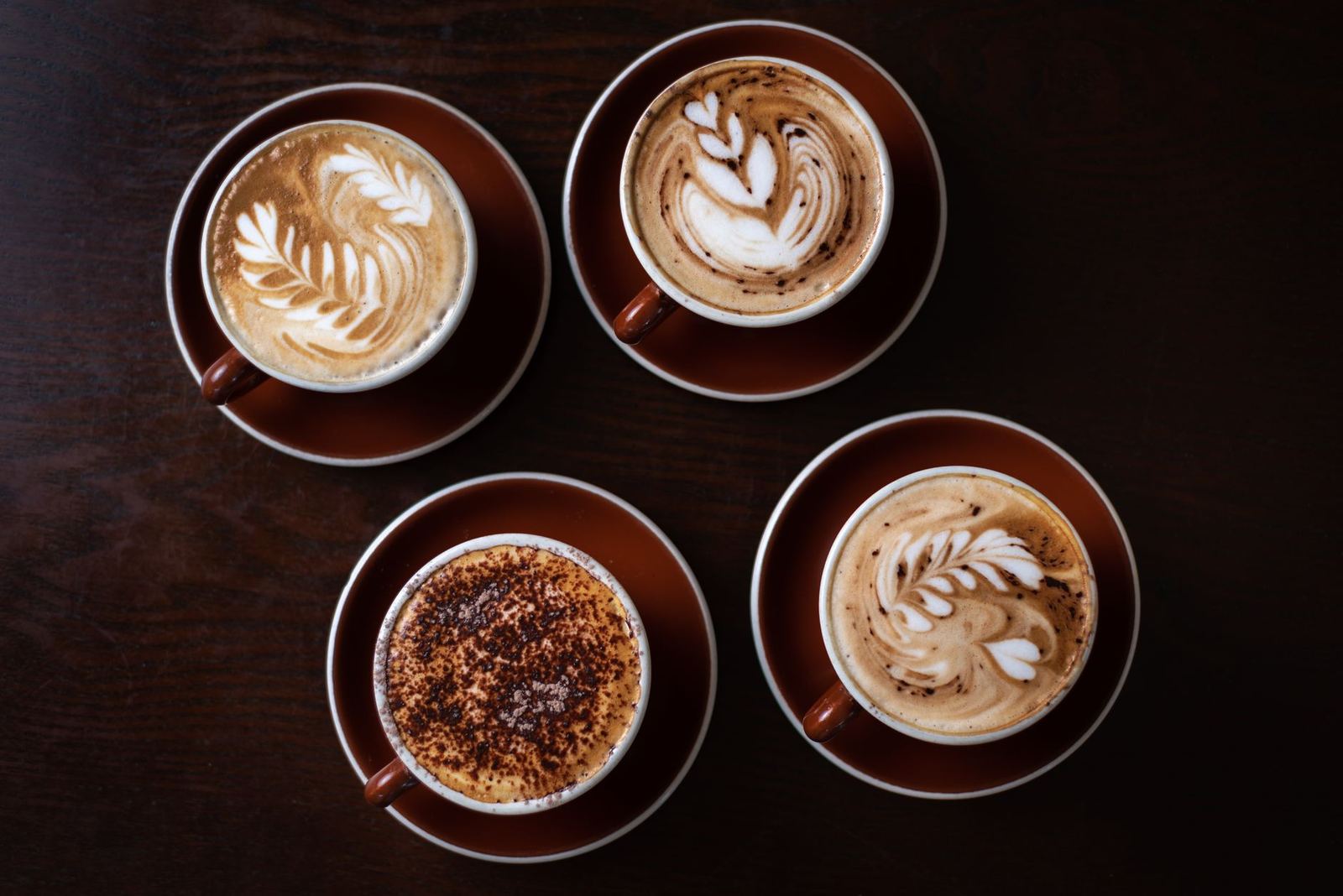
A latte is espresso and steamed milk with a thin layer of microfoam, combined in a ratio of 1:3. It is also larger, typically around 240ml against 180ml for a cappuccino, and tastes milkier and sweeter, all per Expert Reviews.
A flat white is shorter, at around 150ml to 180ml, with a 1:2 ratio of espresso to milk and only a very small amount of foam. For a closer look at the two, read the flat white vs latte comparison.
A mocha is made much like a latte, with chocolate powder or syrup added. A latte macchiato works the other way round: Coffee Review describes a glass filled with hot frothed milk into which espresso is slowly dribbled, creating a layered look.
Americano, long black and other extras
An americano adds hot water to espresso in a ratio of between 1:3 and 1:4, which keeps much of the bold flavour but makes it milder and smoother. A long black is a close cousin: pouring the espresso over the water, rather than water over the espresso, preserves more of the crema. One expert quoted by Expert Reviews calls it a naming convention, long black in Australia or New Zealand and americano elsewhere.
A few more names turn up on longer menus:
- Affogato: vanilla ice cream or gelato submerged in hot espresso, per Mental Floss.
- Con panna: espresso topped with whipped cream.
- Espresso romano: espresso served with a twist of lemon on the side, as Coffee Review describes it.
- Marocchino: espresso sometimes combined with hot chocolate or Nutella and topped with a layer of foam and cocoa powder, according to The Takeout.
Why does the same name mean different drinks?
Names travel badly. The Takeout reports that the caramel macchiato at Starbucks contains steamed milk flavored with vanilla syrup and a drizzle of caramel, which is far from the Italian original. To get something close to a traditional macchiato there, ask for an espresso macchiato.
Italy has its own habits too. Coffee Review says a sure way to reveal you are American in Italy is to order a cappuccino after lunch, or a caffe latte at any time. Those who want a breakfast coffee with more milk than froth usually order a latte macchiato instead.
In Italy, the amount of milk can completely change a drink, and its name, according to The Takeout. A caffè latte has a higher ratio of warm milk to coffee and very little to no foam, while a cappuccino carries much more foam than you will find on top of a macchiato. So a menu that looks repetitive usually hides real differences in the cup, and the milk level is the quickest clue to what you will get.
Foam style differs too. Coffee Review says Italian cappuccino milk is not frothed as thoroughly as in the United States and arrives as a heavier, soupy foam that combines with the espresso. American froth is lighter and drier, and drinkers versed in Seattle-style espresso can order a cappuccino wet, with very little froth, or dry, with mostly hard froth and little milk. The same order can therefore arrive looking quite different on either side of the Atlantic.
Do not mix up a latte with a café au lait either. Coffee Review notes that American caffes often distinguish between a caffe latte, made with espresso, and café au lait, which substitutes ordinary American filter coffee for the espresso. Mental Floss adds that no espresso is used and there is not typically any froth. That small substitution changes the whole character of the cup, even though both drinks are milky.
When you are unsure, use this quick routine:
- Decide how much milk you want: none, a splash, about half, or mostly milk.
- Match that to a drink: espresso, macchiato, cortado, or latte.
- Ask the barista what goes into anything with an unfamiliar name.
For the wider setting, the history of coffee houses is worth a read too.
Frequently asked questions
What is the difference between a ristretto and a lungo?
Show answer
Both use the same quantity of coffee as a regular espresso. A ristretto uses less water and comes out around 20ml, while a lungo uses double the water and is less concentrated, as Expert Reviews explains.
Is an espresso macchiato the same as a latte macchiato?
Show answer
No. Coffee Review describes an espresso macchiato as espresso stained with a small quantity of hot, frothed milk, while a latte macchiato is a glass of hot frothed milk with espresso slowly dribbled in.
What is a doppio?
Show answer
A doppio is two shots of espresso poured into a single cup, according to Mental Floss. It is usually 60ml, per Expert Reviews.
Are an americano and a long black the same drink?
Show answer
They are very similar. The long black pours espresso over hot water to preserve more crema, and the name mostly depends on where you are in the world, per Expert Reviews.