Standing at a Dutch cheese counter and unsure what to pick? The main types of dutch cheese are Gouda, Edam, Boerenkaas, Leyden, Nagelkaas, Maasdam and Leerdammer, sorted by age and fat.
This guide is one piece of the wider story of dutch food.
| Item | Value |
|---|---|
| Gouda | Over half of all Dutch cheese production |
| Edam | Nearly a third of all Dutch cheese production |
| Jonge kaas (youngest) | Aged four weeks |
| Overjarige kaas (oldest) | Aged 18 months or more |
| 48+ label | 48 percent of the dry matter is fat |
| Boerenkaas | EU Traditional Speciality Guaranteed name since 2007 |
These figures come from IamExpat’s guide, updated June 2026, and Wikipedia’s Boerenkaas entry. Figures can change, so check the source before you rely on them.
Why Dutch cheeses carry the names they do
Many people assume a Dutch cheese is named after the region where it is made. According to IamExpat, cheeses were named for the markets where they were historically traded. Haarlem was the first to receive the right to hold a cheese market, in 1266.
Gouda is the classic example. The same IamExpat guide says it is named after the city because it was traded there, not because it was made there, and that the first mention of Gouda cheese dates from 1184.
Outside the Netherlands, the name has spread widely. Wikipedia’s list of Dutch cheeses notes that Gouda is now often used as a worldwide generic term for Dutch-style cheese.
Age labels and fat numbers on Dutch cheese
Dutch shops label cheese, especially Gouda, by how long it has matured. IamExpat describes six age categories, each with its own taste and texture:
- Jonge kaas: aged for just four weeks, very soft and mild.
- Jong belegen: aged for eight to 10 weeks, with a stronger flavour.
- Belegen: aged for between 16 and 28 weeks.
- Extra belegen: aged for a minimum of seven months, harder and crumblier.
- Oud: aged for 10 to 12 months, with a caramel sweetness.
- Overjarige kaas: aged for 18 months or more, the strongest kind.
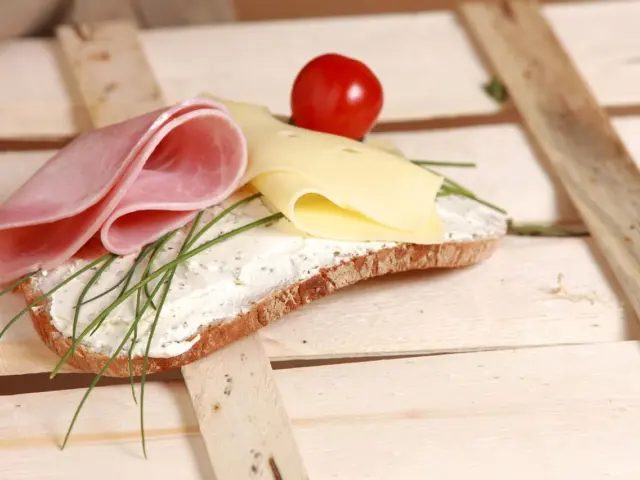
Belegen hits a sweet spot as a sandwich cheese: soft enough not to crumble on the bread but old enough to have a good flavour. Extra belegen is also nice in sandwiches, but IamExpat says it pairs even better with mustard or a beer.
Reading 30+, 48+ and 50+
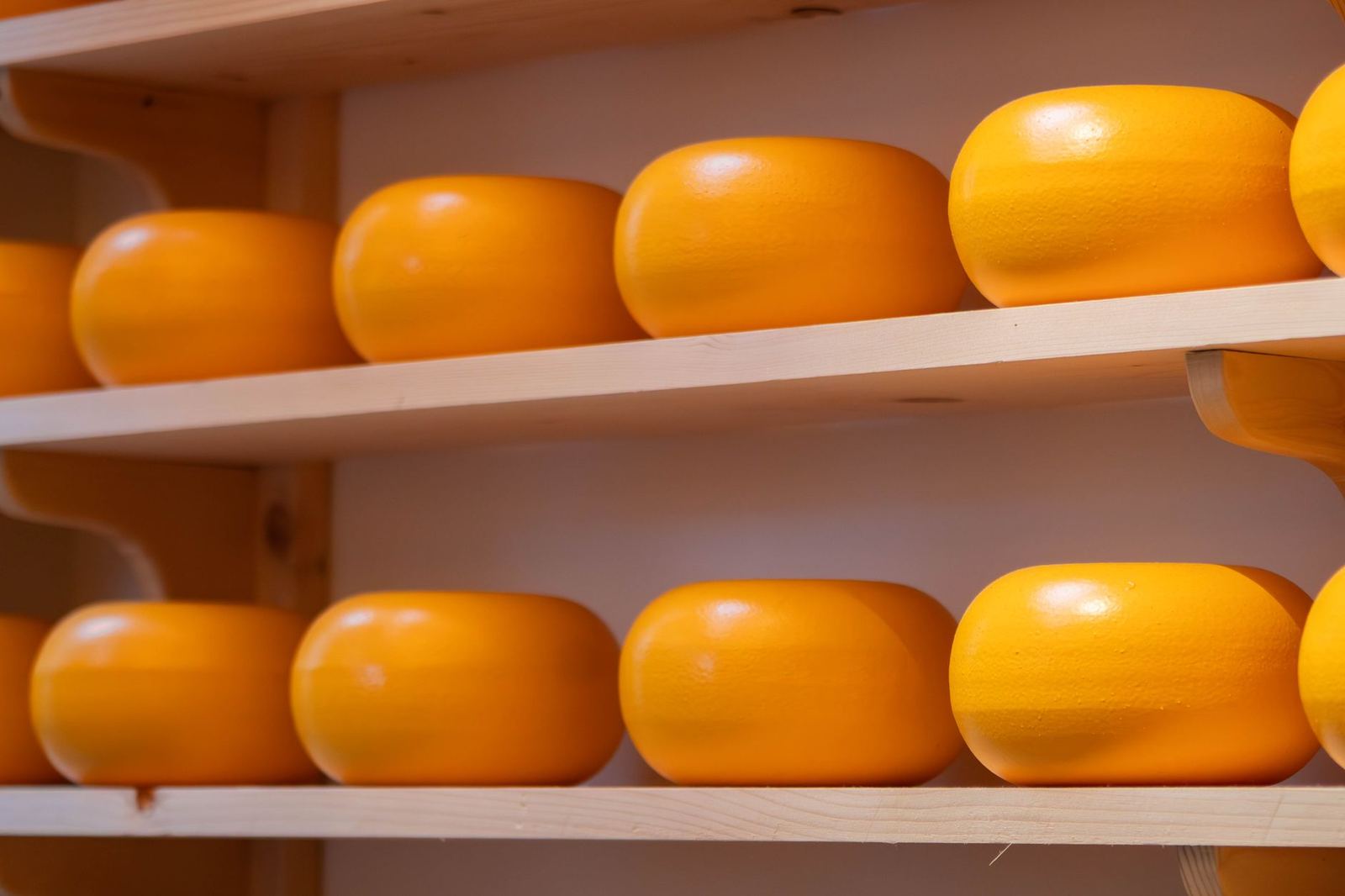
The numbers on Dutch packaging refer to the fat content. A 30+ cheese is leaner than a 50+ cheese, although it may also be much milder, as IamExpat explains.
The same guide says 48+ is probably the most commonly found label in Dutch supermarkets. It means that 48 percent of the dry matter of the cheese consists of fats.
The main types of Dutch cheese
Gouda
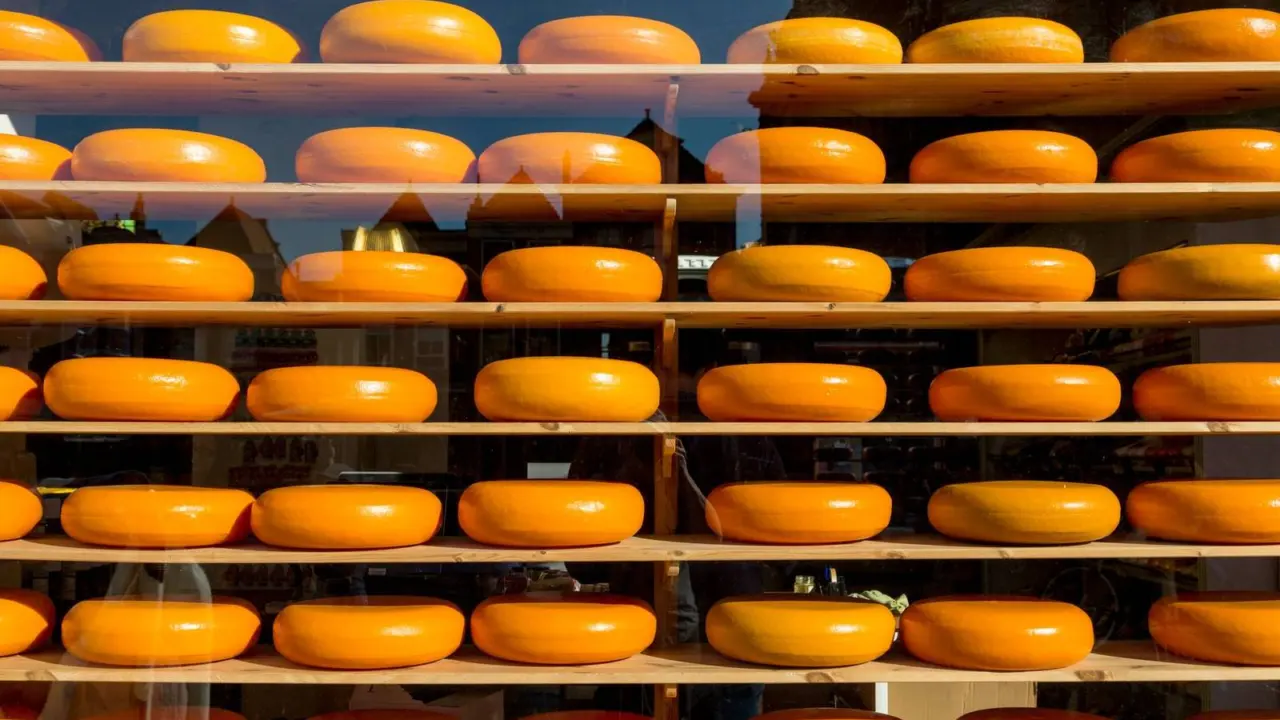
Gouda is a semi-hard cows’ milk cheese, and IamExpat says over half of all Dutch cheese production goes to it. Young wheels are mild, while Cheese Professor says examples matured for 12 to 36 months lose moisture and develop a crystalline crunch.
Edam
Edam makes up nearly a third of Dutch production, per IamExpat. It is recognisable abroad by its red paraffin coating, and it has a significantly lower fat content than many other traditional cheeses plus a mild, salty taste.
Beemster
Wikipedia describes Beemster as a hard cows’ milk cheese, traditionally from cows grazed on sea-clay soil in polders. IamExpat reports that a Dutch Beemster cheese was crowned the best in the world in 2026.
Leyden, Nagelkaas and other spiced cheeses
Spiced cheese is an old Dutch habit. Cheese Professor traces cumin cheese back to the 1600s and links it to spice trade routes.
- Leyden: a cows’ milk cheese flavoured with cumin and caraway seed, per Wikipedia.
- Nagelkaas: “clove cheese”, a cows’ milk cheese with clove and cumin from Friesland, per the same list.
- Kanterkaas: a hard cheese produced in Friesland, with variants flavoured with cumin and cloves.
Maasdam, Leerdammer and trademarked names
Wikipedia’s list calls Maasdam an Emmental-style semi-firm cows’ milk cheese, and Leerdammer a trademarked Emmental-style semi-firm cows’ milk cheese. Gourmand Trotter adds that Maasdam has distinctive internal holes that result from ripening.
Other trademarked names on the same list include Maaslander, a Gouda-style cheese made in Huizen, and Parrano, a Gouda-style semi-firm cheese.
Worth a look at the counter
- Limburger: a soft cheese with a distinctive smell, traditionally from the area of the former Duchy of Limburg, per Wikipedia.
- Roomano: an aged, hard cheese with a lower butterfat percentage than other Gouda-style cheeses, per the same list.
- Graskaas: a seasonal cows’ milk cheese made from the first milkings after the cows are let into the pastures in spring.
- Texelse schapenkaas: a firm, dense cheese made from the milk of sheep on the island of Texel, according to Cheese Professor.
Which Dutch cheeses are protected?
As of DutchNews’s October 2010 report, the European Commission confirmed that Gouda Holland and Edam Holland were to be given protected status. Producers elsewhere could still sell cheese labeled as Gouda and Edam.
The September 2010 DutchNews report adds that only cheese made in the Netherlands would be known as Edam Holland and Gouda Holland. It also lists four cheeses that already had EU status by 2007: Boeren Leidse, Kanter, Noord-Hollandse Edammer and Noord-Hollandse Gouda.
Boerenkaas, the farmhouse cheese
Boerenkaas means farmers’ cheese. Wikipedia says most of it is handmade from raw milk, and that the name has been protected as a Traditional Speciality Guaranteed by the European Union since 2007.
- The milk may come from cows, goats, sheep or buffalo.
- At least half of the milk must be from the farm where the cheese is made.
- Cheese carrying the mark “KB” is certified to be of Dutch origin.
- Principal varieties are Goudse, Edammer and Leidse Boerenkaas.
Using Dutch cheese at the table
Match the age to the job. Belegen suits bread, while older cheeses suit a board.
- Sandwiches: a slice of belegen fits a traditional dutch breakfast table, since it is the sandwich cheese described above.
- Mustard and beer: extra belegen pairs well with both, according to IamExpat.
- Snacking: Gourmand Trotter says cubes of Gouda are usually eaten with Dutch mustard and port wine, or strong beer, as an everyday snack.
- Cooking: the same guide says Old Amsterdam, a granular, hard Gouda matured for 18 months, is widely shredded over pasta, soups, omelets or sautéed vegetables.
If a cheese-and-beer snack is what you are after, you can read about bitterballen too.
Frequently asked questions
What is the most popular Dutch cheese?
Show answer
Gouda. IamExpat says over half of all cheese production in the Netherlands is devoted to it, with Edam second at nearly a third.
What does belegen mean on a Dutch cheese label?
Show answer
It is a mid-aged cheese, aged for between 16 and 28 weeks according to IamExpat. It is soft enough for sandwiches yet has a good flavour.
Is Edam the same as Gouda?
Show answer
No, though both are semi-hard. Edam has the red paraffin coating, a mild salty taste and a significantly lower fat content than many other traditional cheeses.
Is Gouda made in the city of Gouda?
Show answer
Not necessarily. The cheese is named for the city because it was historically traded there, not because it was produced there.
Is Leerdammer a Gouda?
Show answer
Wikipedia’s list of Dutch cheeses describes Leerdammer as a trademarked Emmental-style semi-firm cows’ milk cheese. Other guides may describe it differently, so check the pack.