Worried your first pour-over will taste sour or bitter? Here is how to brew pour over coffee: weigh 1 part coffee to 16 parts water, bloom the grounds, then pour slowly in stages.
Pour-over is one small corner of cafe culture that you can recreate on your own kitchen counter.
| Item | Value |
|---|---|
| Starting ratio | 1:16 (1 g coffee to 16 g water) |
| Example dose | 20 g coffee to 320 g water |
| Bloom | 3x coffee weight, 30-45 seconds |
| Total brew time | 2:45-3:30 (minutes:seconds) |
| Water temperature, light roasts | 195-212°F (90-100°C) |
| Ideal ratio range | 1:14 to 1:17 |
These figures come from Pull & Pour Coffee and CoffeeGeek. Brewing advice changes over time, so check the sources before you rely on the figures.
What pour-over is and what you need
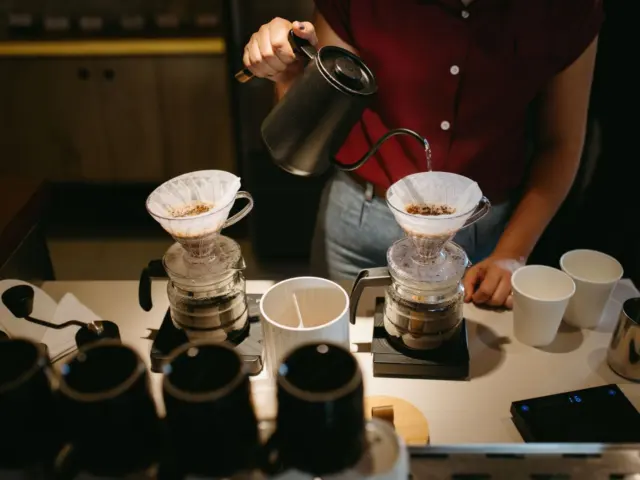
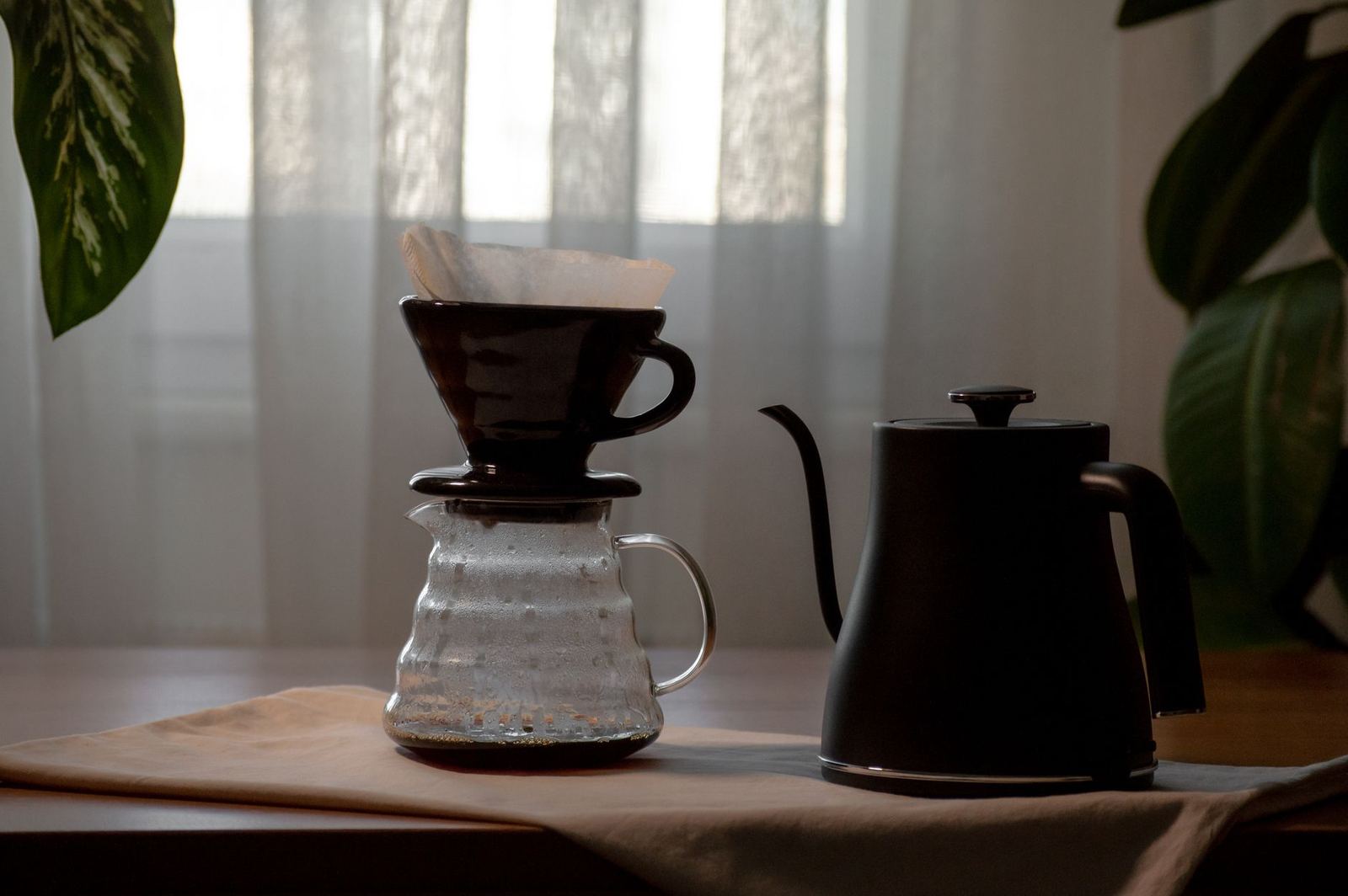
Pour-over is a brewing method where you pour hot water by hand over ground coffee in a paper filter, and the cup drips into your mug or server. One brew guide says the appeal is control: with a drip machine, many of the factors that shape taste are outside your hands.
The same guide lists the basic kit:
- A grinder, or pre-ground coffee (which the guide calls not ideal)
- A dripper, such as the Hario V60 or the Kalita Wave
- Paper filters that fit the dripper
- A gooseneck kettle
- A scale
A starter setup can cost as little as $75.00 without a grinder, according to that guide.
Freshness matters as much as gear. The guide suggests brewing whole-bean coffee ground on demand, within 7-30 days of the roast date, and it recommends light to medium roasts for a clear, balanced cup.
The numbers to start with
Begin with a ratio of 1 gram of coffee to 16 grams of water, which is the starting point in Pull & Pour Coffee’s framework. CoffeeGeek says leading experts consider ideal ratios to fall between 1:14 and 1:17.
Roast level nudges the ratio. Another guide suggests 1 gram of coffee to 14 grams of water for dark roasts, and up to roughly 1 to 17 for light roasts.
Weighing beats guessing by the cup. CoffeeGeek notes that the volume of a coffee-maker cup has never been standardized, and that most manufacturers treat a cup as 100 ml to 120 ml.
Timing and weighing every brew is the habit that makes results repeatable. Coffee Bros advises doing both so you understand the outcome, which means you can see exactly what changed when one cup tastes different from the last.
Water temperature also follows roast level. Pull & Pour Coffee gives these ranges, and notes that hotter water raises extraction:
- Light roasts: 195-212°F (90-100°C)
- Medium roasts: 185-200°F (85-93°C)
- Dark roasts: 175-190°F (79-88°C)
Sources overlap but do not match exactly. Coffee Bros gives 203-212 degrees for light roasts, 194-203 for medium and 185-195 for dark, so treat any range as a starting point and let taste guide you.
No thermometer?A coffee company’s guide suggests bringing water to a boil and letting it rest for about 45 seconds to land near 200 degrees Fahrenheit.
Grind size is the dial you will turn most. One guide starts at medium-coarse while another starts at medium to medium fine, so begin in the middle and adjust. Grinds that are too fine can clog a V60.
Your dripper changes the result too. Pull & Pour Coffee says most pour-over brewers share the same fundamentals, but their geometry, material and size all affect the final cup, so expect to re-tune when you switch brewers.
Do not overlook the water itself. It makes up about 99% of the liquid in your cup, according to Coffee Bros, so its quality shows up in the taste.
Before you pour, run through this checklist, which uses the Pull & Pour Coffee numbers:
- Weigh 20 g of coffee and 320 g of water for the 1:16 starting ratio.
- Pick a grind between medium-coarse and medium to medium fine.
- Heat the water to the range that suits your roast.
- Start a timer and aim for a total brew time of 2:45-3:30.
Step-by-step pour-over method
This recipe follows Pull & Pour Coffee’s framework at a 20 g dose, so you weigh 20 g of ground coffee and 320 g of water. That gives the 1:16 ratio above.
- Rinse the filter. Set the filter in the dripper and wet it with hot water, because an unrinsed paper filter can give a papery taste. The rinse also warms the brewer and your mug.
- Add the coffee. Grind 20 g of coffee and add it to the filter, as in the framework’s recipe.
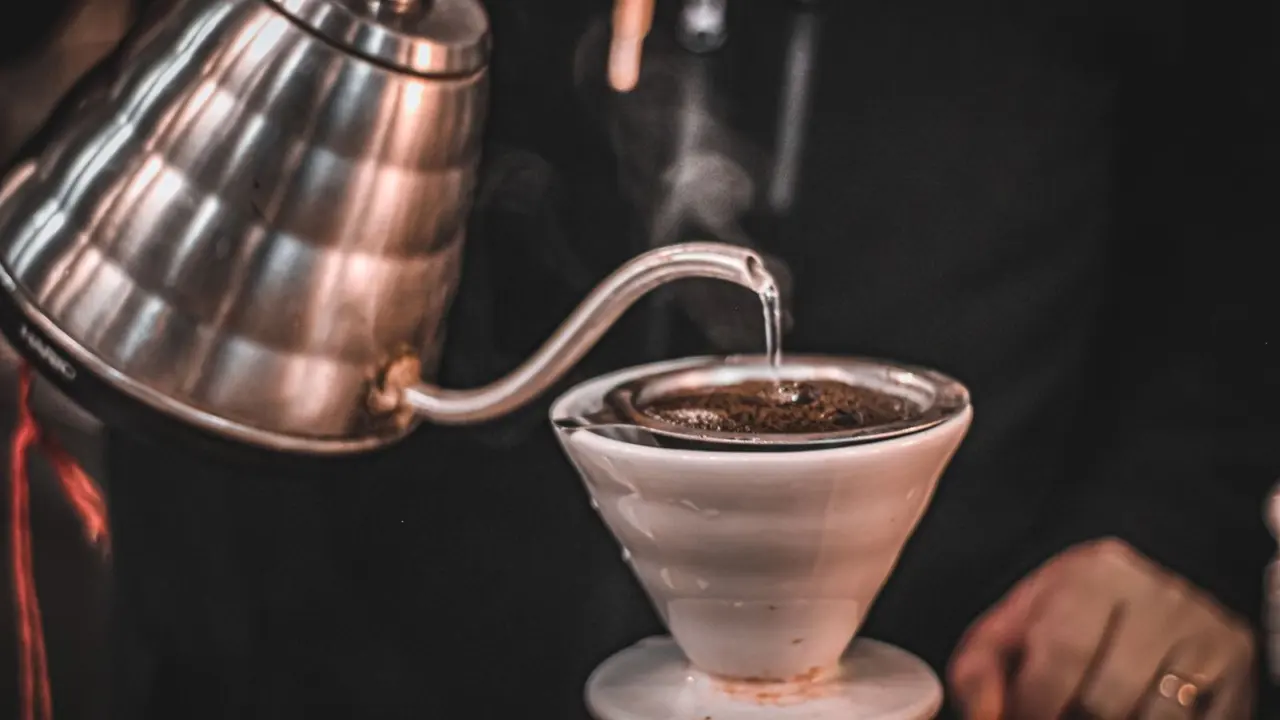
- Bloom. Pour 60 g of water (3x the coffee weight), starting in the center and working outward to wet every ground, then swirl. Wait 30-45 seconds (source).
- First pour. At around 0:45, pour 130 g of water, again from the center outward and not directly onto the paper filter. Swirl gently to level the coffee bed.
- Final pour. At around 1:45, pour the last 130 g of water, then swirl the brewer gently.
- Draw down. Let the water drain through. Total brew time should land between 2:45 and 3:30.
The bloom lets the coffee release gas, and Coffee Bros says it helps extraction come out more even. Fresh coffee makes the bed of grounds rise and bubble during this step.
Fixing a sour or bitter cup
Change one variable at a time so you can tell what helped. Coffee Bros advises going finer if the brew runs too short and tastes sour, and coarser if it runs too long and tastes strong and bitter.
You have a few levers to try, in this order:
- Grind size: finer or coarser, as above
- Water temperature: higher water temperature means higher extraction
- Agitation: more swirling or stirring can increase extraction
Keep notes on each brew. A cup you can repeat is worth more than one lucky success.
Pour-over beyond the kitchen
One coffee company’s guide calls pour-over a staple of artisanal coffee shops the world over. That makes it a handy skill to practise at home before you order one at a cafe.
You can read about third wave coffee on this site for wider context on cafe brewing. Readers curious about older cafe traditions can browse the history of coffee houses.
Frequently asked questions
Do I need a scale?
Show answer
A scale is the most reliable option. Without one, CoffeeGeek says a heaping tablespoon of ground coffee is roughly 7 g, give or take 5%, and 7 g per 100 ml of water gives about a 1:14 ratio.
How long should a pour-over take?
Show answer
The Pull & Pour Coffee framework aims for 2:45 to 3:30, while Coffee Bros targets an end time of 3:00 to 3:30. If you land outside that window, adjust your grind size.
Can I brew a bigger batch?
Show answer
Yes. The framework scales from 12 g to 30 g of coffee, and above 24 g it suggests splitting the final pours into three instead of two.
Which roast suits pour-over?
Show answer
Coffee Bros recommends light to medium roasts with delicate acidity and a well-balanced taste, though the method works with any coffee variety.