Bored of the same eggs and bacon plate? You can serve savory brunch dishes like shakshuka, biscuits and gravy or breakfast burritos instead.
Planning a whole menu? Start with these brunch ideas, then come back here for the savory side.
| Item | Value |
|---|---|
| Meaning of “shakshuka” | “Mixed up” or “shaken” |
| Early written mention of “chakchouka” (French records, Tunisian dish) | 1894 |
| Shakshuka on Israeli restaurant menus | By the 1990s |
| Traditional shakshuka recipe timing | 10 minutes prep, 25 minutes cook |
| Eggs cooked in the sauce, covered | About 6-8 minutes |
These figures come from Mashed and Eats History. Recipes and food-history claims can change, so check the sources before you rely on them.
Shakshuka: the one-pan brunch staple
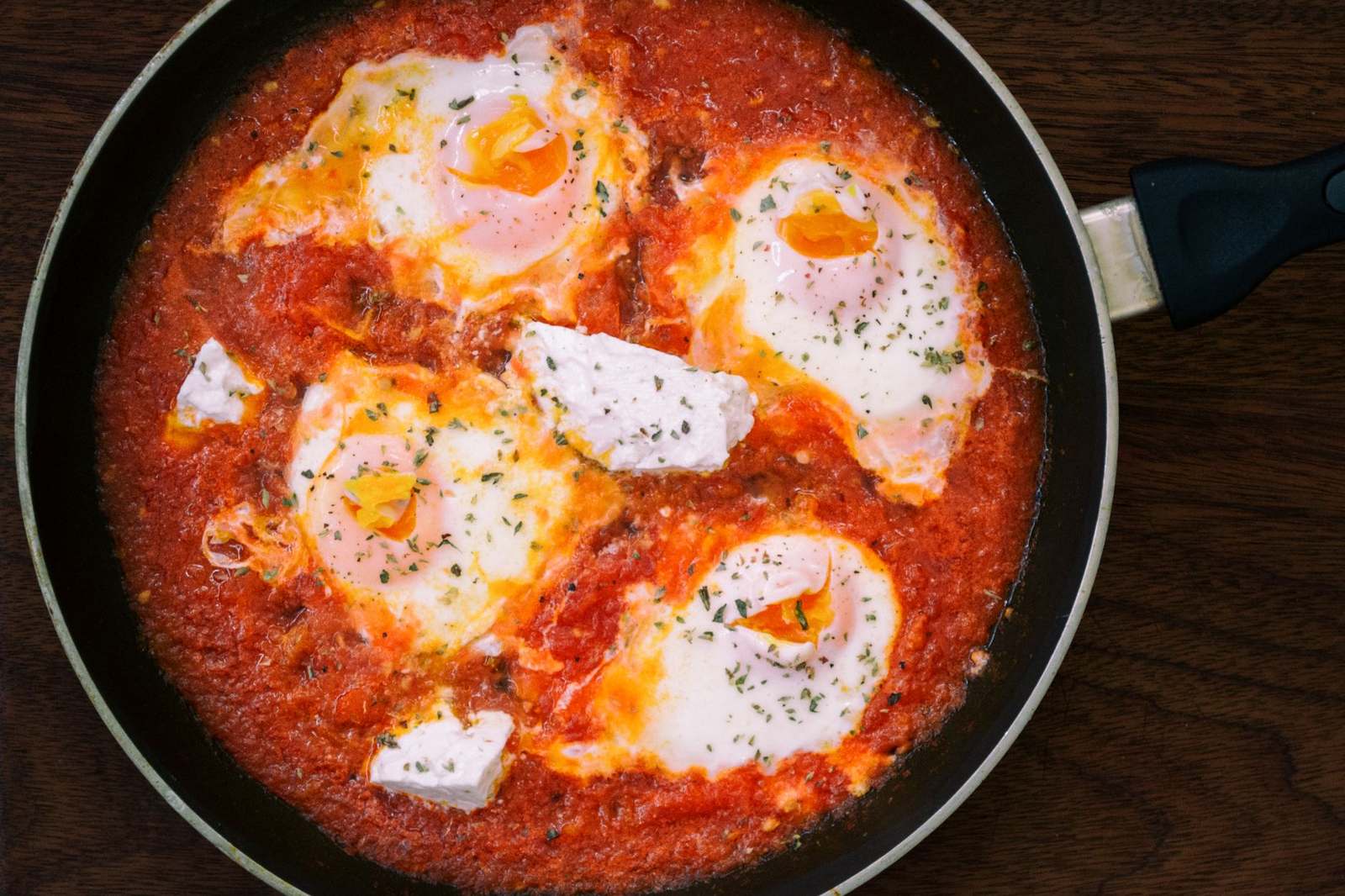
According to Mashed, shakshuka is generally a thick tomato sauce cooked with eggs and vegetables like onions and peppers, plus spices and a pinch of garlic. The word translates to “mixed up” or “shaken,” which describes the preparation well. It is also quick to make and uses inexpensive ingredients.
Where it comes from is a friendly argument. Eats History says the first written mentions date to the late 19th century: in 1894, French records described “chakchouka” as a Tunisian dish, and by 1899 another European source was calling it Turkish. Food historian Rafram Chaddad attributes it most directly to Tunisia and the Amazigh (Berber) peoples of the Maghreb.
Mashed reports that some historians point to North African countries like Morocco, Libya and Tunisia, while Yemen and Turkey say the dish is theirs. Researchers also describe a dish of chopped meat and cooked vegetables called “saksuka” in countries once ruled by the Ottoman Empire. By the 1990s, shakshuka was on Israel’s restaurant menus.
Part of its spread is practical. Mashed notes that immigrants from North African countries arrived in Israel with many financial strains and looked for affordable meals without complicated ingredients. Shakshuka suited them because it only required a pan.
How do you make shakshuka at home?
The steps below follow the traditional recipe on Eats History, which lists 10 minutes of prep and 25 minutes of cooking. You need a wide skillet, a lid and something to scoop with.
- Heat olive oil over medium heat and cook the chopped onion and bell pepper until softened.
- Stir in garlic, then add cumin, paprika and cayenne (plus red pepper flakes if you like heat) and toast them briefly.
- Pour in crushed tomatoes, season with salt and pepper, and simmer until the sauce thickens slightly.
- Make little wells with a spoon, crack the eggs into them and cover the skillet until the whites are set and the yolks are still runny.
- Garnish with parsley or cilantro and serve straight from the pan with plenty of bread.
On timing, the same recipe gives about 5 minutes to soften the vegetables, 10-15 minutes of simmering for the sauce and about 6-8 minutes once the eggs go in. Adjust the chilies and cayenne to your crowd: a mild version still tastes fantastic, according to the recipe notes.
Short on time? Mashed says you can even start from a jar of tomato sauce. It also suggests dipping a slice of bread, sourdough or challah into the tomato and egg yolk pool.
Shakshuka variations and egg-in-sauce cousins
In Israel, almost any dish with poached eggs in a sauce is now called shakshuka, according to Aish. That is how versions like green shakshuka, coconut lentil shakshuka and beef ragut shakshuka came about. The same article lists add-ins you can mix and match:
- Mushrooms, spinach or even sweet potatoes.
- Preserved lemon, salty sheep milk cheeses, olives or harissa.
- A spicy sausage such as chorizo or merguez.
Mashed adds that some recipes feature meat, sausage or eggplant, and some U.S. versions feature labneh and feta cheese.
If you want a different spin on the same idea, Eats History points to shakshuka’s cousins. They share one simple logic: a tomato-based stew made hearty with eggs.
- Pisto manchego in Spain: a stew of tomatoes, peppers and eggplant, often topped with an egg.
- Uova in purgatorio in Italy: eggs simmered in a spicy tomato sauce.
- Huevos rancheros in Mexico: fried eggs with a tomato-chili base.
American savory brunch classics
Chowhound’s roundup of breakfast dishes invented in America is a handy menu shortlist. Here are five that work well at a brunch table:
- Eggs Benedict: hollandaise over a poached egg, Canadian bacon or ham, and a toasted English muffin.
- Biscuits and gravy: buttery biscuits under a gravy built on ground pork and its drippings.
- Fried chicken and waffles: a savory and sweet pairing finished with maple syrup.
- Breakfast burritos: eggs, ham, cheese and hash browns wrapped in a tortilla.
- Shrimp and grits: a South Carolina pairing of grits and local shrimp.
Chowhound says eggs Benedict came from New York City in the late 19th century, with Delmonico’s Steakhouse and the Waldorf-Astoria Hotel both staking a claim. Biscuits and gravy have origins in Southern Appalachia lumber mills during the 19th century, hence the name “sawmill gravy.” It was a low-cost, calorie-dense breakfast.
For fried chicken and waffles, Chowhound credits Wells Restaurant in Harlem, which opened in 1938. It inspired Herb Hudson to open Roscoe’s House of Chicken and Waffles in Los Angeles in 1975.
The breakfast burrito has a tidy timeline in the same roundup. Tia Sophia’s in Santa Fe served a smothered version a year before Dee’s Restaurant began serving breakfast burritos there in 1976, so both date to the 1970s. For shrimp and grits, one report of how indigenous people prepared grits dates back to the 1680s.
How do you build a savory brunch menu?
Pick one saucy centerpiece, such as shakshuka, and let it do the work. Because it cooks in a single pan and goes to the table with bread for scooping, it leaves you free to handle everything else.
Next, add something with crunch or richness from the American list: biscuits with gravy, or chicken and waffles if your guests like savory and sweet on one plate. Chowhound notes that this combination has been gracing plates for generations.
If you want something sweet on the side, browse these sweet brunch recipes to round out the table. When you are ready to plan timing and setup, read the guide on how to host a brunch.
Finally, keep one dish gentle on spice. Shakshuka can be fiery or mild, so make a milder pan or serve chili on the side and everyone can eat comfortably.
Frequently asked questions
Where does shakshuka come from?
Show answer
No single answer is agreed. Eats History notes that food historian Rafram Chaddad ties it most directly to Tunisia and the Amazigh (Berber) peoples, yet an 1899 European source called it Turkish.
What does shakshuka mean?
Show answer
Mashed says the word translates to “mixed up” or “shaken,” based on its preparation. Aish likewise describes the name as meaning “all mixed up.”
Can you make shakshuka with jarred tomato sauce?
Show answer
Yes. Mashed says you can even make it with a jar of tomato sauce, and that it is quick and uses inexpensive ingredients.
Is shakshuka only for breakfast?
Show answer
No. Aish says it is traditionally served for breakfast but can also be eaten for lunch or dinner.
Which American dishes work as savory brunch options?
Show answer
Chowhound covers eggs Benedict, biscuits and gravy, fried chicken and waffles, breakfast burritos and shrimp and grits among its American breakfast dishes.